

Electronics do not go in the dumpster, and everything else in the room does. South Carolina has banned computers, computer monitors, printers and televisions from solid waste landfills since July 2011. Those items need a recycler rather than a roll off.
We are Dump Kings, and we deliver a quality dumpster rental service in Greenville, SC to homes across the area. Our containers suit cleanouts that mix ordinary debris with a few devices needing separate handling. Sort the screens and towers into their own pile first. Then let the container take the furniture, the shelving and the rest of what comes out of that room.
Which Electronics South Carolina Keeps Out of Landfills
The state’s 2010 act, effective from July 2011, names four categories: computers, computer monitors, printers and televisions. Those are the items a resident may not knowingly place in a waste stream headed for a solid waste landfill. Laptops and desktops both fall under the computer heading. The reasoning the state gives is straightforward. These devices contain materials such as lead and mercury that need managing properly rather than burying.
Not every device with a plug is covered. A microwave, a toaster or a vacuum cleaner sits outside the ban. Those can go in a container with the rest of a cleanout. The line runs through screens and computing hardware rather than through appliances generally. If you are unsure whether something qualifies, your county recycling office can confirm it. Most counties publish a list of what their drop off sites accept.
What Still Goes in the Container From the Same Room
A home office or a media room produces far more non electronic debris than people expect once they start pulling it apart. Desks, shelving units, filing cabinets, office chairs, carpet, curtains and the cardboard every device shipped in all go straight into the roll off. So does the cabling nobody has identified in six years.
That is usually the bulk of the job by volume. A stack of monitors takes up very little space compared with the furniture it was sitting on. Removing the electronics rarely changes the container size you need. Size against the furniture and the fittings instead. That is the same approach as choosing the right dumpster for garage cleanouts, where banned items turn up among the boxes.
Sorting the Electronics out Before We Arrive
Doing the separation before the container lands is easier than doing it afterwards. Once a roll off is in the driveway and a room is being cleared at speed, a monitor goes in without anybody thinking about it. Retrieving it from under three feet of debris is nobody’s idea of a good afternoon. A marked spot in the garage or a corner of the driveway solves this for the cost of ten minutes. Masking tape and a marker are enough to keep a helpful neighbor from undoing the sorting.
Work room by room rather than by category. Pull the screens, towers, laptops and printers out first, set them aside, and then clear the furniture into the container in one continuous pass. Our dumpster rental size guide is worth a look at this stage, since picking the right container the first time keeps the whole job to a single haul. Removing hard drives or wiping devices, if that matters to you, is also far simpler while everything is still stacked and accessible.
Planning a cleanout with a few devices in it? Give us a call at (864) 553-1770, and we will tell you what goes in the container and what needs a recycler.
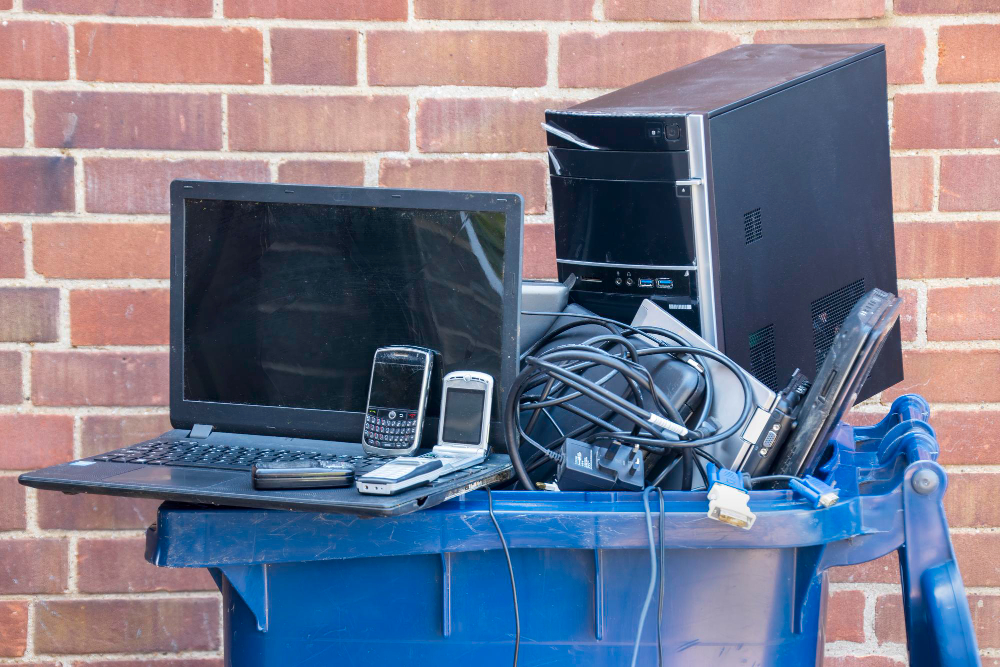
Where the Electronics Actually Go
Separated devices need an electronics recycler rather than a general waste hauler, and that is the route the disposal ban is built around. Every county in the state runs collection programs or single day events for exactly this. Several national retailers also operate take back schemes for smaller items. A search on your county name plus electronics recycling will turn up the nearest option in a minute or two.
Treat it as its own short errand rather than something that has to happen first. The dumpster can arrive and the room can get cleared while the electronics sit in the garage waiting for a Saturday drop off. Working devices are worth a second look before they go anywhere. Schools, charities and refurbishers often take machines that still run. A laptop from three years ago rarely belongs in a recycling bin at all.
Sizing the Container for Everything Else
Our containers come in 10, 15, 20, 25 and 30 yards. A 10 yard holds roughly three to four pickup truck loads. That handles a single room being emptied, such as a home office or a media room. A 15 yard dumpster rentals covers the middle ground where a cleanout has spread into a second room or the attic above it.
Larger jobs scale from there. A 20 yard takes around six to seven truck loads. It suits a full floor, or a cleanout that has picked up flooring and cabinetry along the way. The 25 and 30 yard sizes exist for whole house clearances and renovation work. Dense material changes the maths regardless of volume, since concrete, dirt and shingles reach the weight allowance before the box looks full. Our breakdown of dumpster rental sizes goes through where each one earns its place.
Clear the Room Without the Devices Holding it Up
Electronics are the one part of a cleanout that needs planning rather than muscle. They stop being a problem the moment they are sorted into their own pile. Describe the room, take a size that fits the furniture, and the rest of a Greenville, SC cleanout becomes a single afternoon.
Frequently Asked Questions
What if a TV or computer ends up in the dumpster by mistake?
Let us know before the pickup. Computers, monitors, printers and televisions are banned from South Carolina landfills, so they need to come out of the container before it’s hauled away. A banned item buried in a full load can hold up the pickup, which is why sorting the electronics out before the container arrives saves everyone time.
Do you take the electronics away too?
The electronics need to go to an electronics recycler, not a dumpster. Most counties run drop off sites or collection events, and several retailers take back smaller devices. Our container handles everything else in the room, so the electronics can wait in the garage for a quick trip to the recycler.
What size dumpster do I need for a home office cleanout?
A 10 yard container usually handles a single room like a home office or media room. If the cleanout spreads into a second room or the attic, a 15 yard covers it. Size the container for the furniture and fittings, not the electronics, since the devices take up very little space by comparison. Pricing depends on the size and the weight of what goes in.
How quickly can you deliver a container?
We confirm your delivery window soon after you call, so you can plan the cleanout around it. Tell us what the room holds when you book, and we’ll recommend the right size for the part of the job we can take.
Once the electronics are set aside, the rest of the cleanout goes straight into the container in one easy pass. Dump Kings will deliver the right size for your furniture, shelving and debris. Call (864) 553-1770, and to get the job done without extra trips.
Related Topics: