
Most renovation and cleanout projects produce two categories of debris: material that goes in the dumpster without issue and material that just can’t go in, period. The tricky part is that most people don’t figure this out until they’re already mid-project, with a container sitting on the driveway and a can of old paint in one hand. Kind of a stressful moment, honestly.
A roll-off handles the bulk of what most projects generate. But genuinely hazardous materials? Those need a separate disposal process altogether. It’s just how it works. Mixing the two causes problems that show up later, usually at pickup, when a prohibited item gets flagged in the load.
Sorting this out before the container even arrives is the smarter move. It keeps your project in line with South Carolina disposal rules and saves you a bit of back-and-forth with the rental company. If you’re working with expert dumpster rental services, they can usually walk you through what’s allowed before you even schedule the drop-off.
What Actually Counts as Hazardous
Hazardous materials are items that can’t go through standard waste disposal because of the risks they pose to health or the environment. The category is broader than most people initially expect.
Paint is the most common one and the one that most often gets tossed into a dumpster without a second thought. Liquid paint, both latex and oil-based, is considered hazardous. If the can has any liquid left in it, it doesn’t go in the container.
Household chemicals with warning labels, pesticides, and chemical-based fertilizers fall into this category as well. Motor oil, antifreeze, brake fluid, and other automotive fluids are included. Batteries of all kinds, flammable liquids, propane tanks, and anything with hazard labeling on the container all need to go somewhere other than the roll-off.
What Your Roll-Off Does Accept
The vast majority of what a typical renovation or cleanout generates is accepted without issue. Furniture, drywall, lumber, flooring, roofing shingles, landscaping debris, yard waste, concrete, dirt, boxes, general household junk, cabinets, countertops, tile, and fixtures all go in the container.
Appliances are mostly accepted, but refrigerators and air conditioning units are the exceptions worth flagging. Those may require refrigerant removal before proper disposal. If either is part of your load, call our team at Dump Kings before putting it in the container, and we’ll confirm the current requirements for your project in the Travelers Rest or Greenville, SC area.
For anything else you’re uncertain about, a quick call before loading is faster than finding out after pickup that there’s a problem.
How to Sort Your Load Before the Container Arrives
The cleanest approach to a project that includes hazardous materials is to separate before the container shows up. Walk through the project space the day before delivery and divide everything into two groups: material going in the dumpster and material that needs to go somewhere else.
Stage the hazardous items in a separate area, clearly away from the debris that will be loaded. When the roll-off is on the driveway in Travelers Rest, the loading process runs from the clean pile only. That’s a much more controlled situation than sorting mid-load or catching a prohibited item after it’s already in the container.
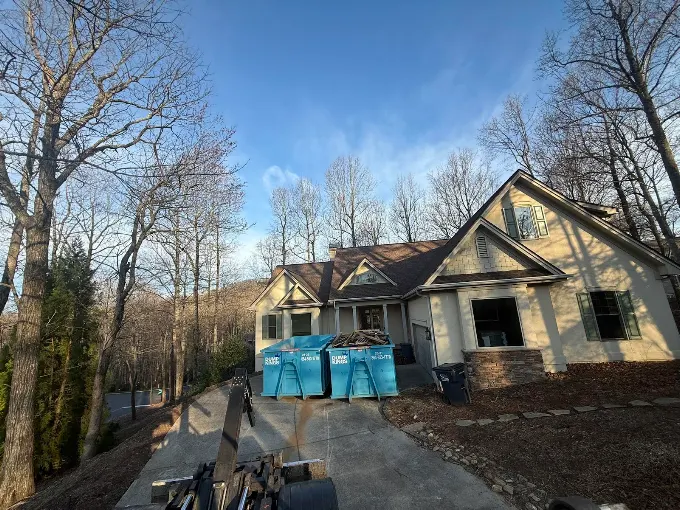
For contractors managing job sites across Greenville, SC, and Upstate South Carolina, this is worth building into the site setup from day one. A quick brief with the crew on what can and can’t go in the container at the start of the job prevents the problems that come up when someone doesn’t know the rules. When you book with Dump Kings, our team can answer any material questions upfront so the crew has clear guidance before work starts.
Where Hazardous Materials Actually Go
Hazardous materials can’t go in the regular trash either, so the question becomes where they do belong. South Carolina’s Department of Health and Environmental Control provides guidance on the proper disposal of hazardous household and commercial waste.
Greenville County has resources available for residents dealing with these materials, and searching for household hazardous waste disposal through Greenville County’s official channels is the most reliable way to find current drop-off locations and collection events available to Travelers Rest area residents.
Motor oil and automotive fluids are often accepted at auto parts stores and service centers at no charge. Usable paint may qualify for community donation programs. Solidified latex paint may be disposed of as solid waste in some circumstances, but liquid paint cannot. Check with local resources for current guidelines specific to your materials.
Getting the Rest of the Project Handled
Once the hazardous materials are set aside for proper disposal, the rest of the debris is straightforward. Dump Kings handles the non-hazardous portion for projects throughout Travelers Rest, Greenville, SC, and across Upstate South Carolina. We deliver the container, your crew fills it with accepted materials, and we haul it away when the job wraps. The quoted price covers delivery, pickup, and disposal, and it doesn’t change after the container is dropped.
For most cleanout and renovation projects in the area, a 20 yard dumpster handles the bulk of the accepted load. Larger projects may call for a 25 yard dumpster rental. If you’re not sure which size fits, call us before booking, and we’ll walk through it.
More on accepted materials and how the booking process works is on our dumpster rental in Greenville, SC, page. For projects in Travelers Rest and across the Greenville, SC, service area, visit dumpkingsgvl.com to book and get an upfront quote.