
Renting a dumpster is supposed to take work off your plate. The container shows up, you fill it, and we come back and haul everything away. That is how the job goes most of the time. But projects do not always go as planned. Sometimes a load turns out bigger than expected, or the debris is heavier than it looked.
When that happens and the container hits its limit, a lot of people are not sure what comes next. Fair enough. It is not something most people think about until they are standing next to a pile that did not quite fit.
At Dump Kings, your trusted dumpster rental company in Greenville, SC, overflow situations come up regularly, and we hear the same questions every time. What does overflow actually mean? Who is responsible? What does it cost? Keep reading, and we will walk you through all of it so you have a clear picture before your rental even starts.
What Overflow Actually Means on a Roll-Off Container
Every roll-off dumpster has a fill line marked near the top of the inside walls. That line is not a rough guideline. A load sitting above it cannot be legally transported on public roads. This is a transportation regulation, and it applies to every hauler on every road.
When our driver arrives for a scheduled pickup and the debris is above that line, the container does not move. The load has to come back within the legal limit before pickup can happen.
Overflow does not always look like junk piling over the sides. Two situations are considered overflow events, and both require action before pickup can proceed:
- The container is within the volume limit overall but has one section loaded too high because items were not distributed evenly.
- The fill line is technically respected, but the container has already exceeded its weight limit because of dense material sitting at the bottom.
Why Overflow Happens More Often Than People Plan For
Undersizing is the most common cause. A homeowner walks through a space, makes a rough estimate of what is coming out, picks what seems like the right container size, and discovers two days into the job that the debris volume is far larger than it appeared intact.
This is not unusual. Debris that fills a room when it is torn out looks nothing like the same material in place. Kitchen renovations, attic cleanouts, and estate clearances surprise people with their volume more than any other project type.
Poor loading is just as much of a factor. Debris loaded without any real organization fills a container faster than it should. Furniture that could be broken down goes in whole and takes up three times as much space. Flat items get stood on end. Light material gets stacked loosely and creates dead air.
A container loaded without thought hits the fill line well before a properly loaded one would, even when the total volume of debris is identical. For more on how to properly load a dumpster, that guide covers the method in detail.
Weight Limits vs. Fill Lines
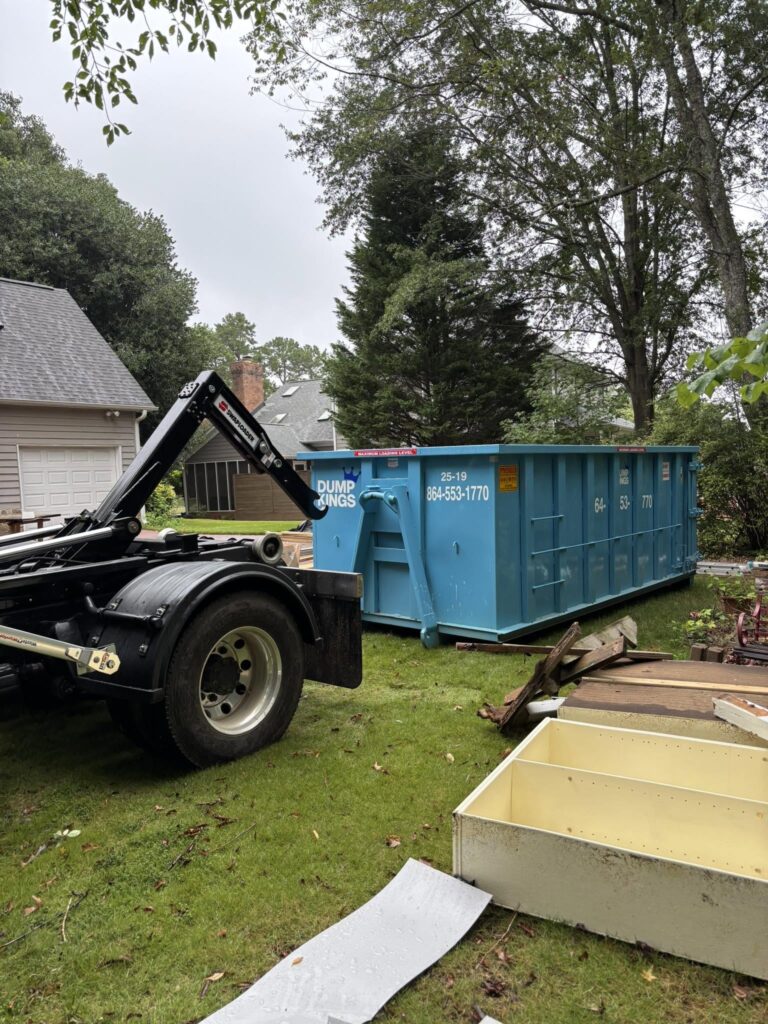
Volume and weight are two separate limits, and both can cause a pickup to fail. The fill line governs volume. The weight allowance governs how heavy the load can be, and that allowance is included in every upfront quote for our dumpster rental in Greenville, SC.
Concrete, roofing shingles, soil, and tile hit weight limits fastest. A fraction of a container filled with concrete can reach its weight limit before the container looks anywhere near full by volume. When heavy materials are part of the project, we need to know about them at booking so we can quote the job accurately. The price we quote upfront is the price on the invoice when the load is within the agreed parameters.
What We Do When a Container Cannot Be Picked Up
When a driver arrives for a scheduled pickup and the container is over the fill line, the container stays in the driveway. The truck heads back without it. Someone needs to bring the load back within the legal limit, which means pulling material out and either storing it temporarily or arranging another container for the overflow.
If you realize before the scheduled pickup that the container is over the line, call us before the truck heads out. That one call opens up options that do not exist once the driver has already arrived and had to turn around. Depending on the situation, we may be able to:
- Arrange a larger container swap
- Schedule a second pull for the remaining debris
- Walk you through what to remove to bring the first load within limits
Calling early keeps the project on schedule.
How to Keep the Container Within Limits
Sizing up when you are uncertain is the simplest prevention. If you are deciding between two container sizes and cannot commit, take the larger one. The cost difference between sizes is far smaller than the cost of another delivery and pickup.
When you call to book, describe everything that is coming out, including what is in the back corner and what you are pulling from adjacent spaces. That full picture is what gets you to the right size the first time.
The loading technique helps throughout the rental. Heavy items go on the bottom, flat items get laid flat, and the load stays level and distributed from back to front. Before loading starts, it is also worth checking what can and can’t go in a dumpster rental so there are no surprises about what materials are and are not accepted once the project is underway.
Frequently Asked Questions
What should I do if the container fills up before the job is done?
Call us right away. We can look at a larger container swap, schedule a second pull for the overflow, or walk through what can be removed to keep the first load within limits. The sooner you call, the more options are on the table.
Is there an extra charge if my load is overweight?
Yes, if the load exceeds the weight allowance in your upfront quote. We explain this at booking and factor heavy materials into the quote when you tell us about them in advance. A load that goes over the allowance because of materials we did not know about results in an overage charge that a short conversation at booking would have prevented.
What happens if the driver shows up and the container is overfilled?
The pickup does not happen on that trip. The container stays, and the truck returns without it. Call us as soon as you know the container is over the line so we can figure out the best path forward before the driver makes the trip out.
Can I keep loading after I call for pickup?
Once pickup is scheduled, stop loading. If more debris comes up after the call, let us know, and we will adjust the schedule or arrange a second pull once the first container is clear.
Do the fill line rules apply to every container size?
Yes. Every roll-off container from the 10-yard to the 30-yard has a fill line and a weight allowance. The limits are different by size, but the rules apply the same way across the board.
Contact Us
Looking for fast, reliable dumpster rentals in Greenville, SC, and surrounding Upstate communities? Dump Kings makes it easy to get the right dumpster delivered and picked up on time, whether for a home clean-out or a commercial project.
Phone: (864) 553‑1770. Call to book your dumpster or get a quote.
Ready to rent a dumpster? Contact Dump Kings for a quick quote or to schedule your delivery.